Product Donation

When a hurricane makes landfall or a wildfire tears through a town, the first 72 hours decide how quickly families get clean water, hygiene supplies, diapers and a safe place to sleep. For corporate social-impact teams, those same hours decide whether your company's response is fast, visible and genuinely useful, or stuck in approvals and logistics.
The right corporate disaster relief partnership solves that problem before the disaster hits. It gives you a ready channel for cash, product and people, so your company can act the moment a crisis begins and stay for the long work of recovery.
This guide covers what a corporate product donation program is, how it powers rapid disaster response, the questions to ask when choosing a disaster relief partner, and how to bring your employees into the work.
A corporate product donation program is a structured partnership in which a company donates new goods, such as excess inventory, first-quality returns or discontinued products, to a nonprofit that distributes them to people in need. Unlike a one-off drop-off, a well-run program includes agreed processes for pickup, documentation, brand protection and impact reporting.
For disaster relief, product donations matter because families need physical goods immediately: water, hygiene items, cleaning supplies, bedding, generators and building materials. Companies that already make or stock these items can deliver more value as product than as the equivalent cash, and they keep usable goods out of landfills.
A strong program typically includes:
At World Vision, these elements come together in our product donation program, which has no fees for donors or recipients.
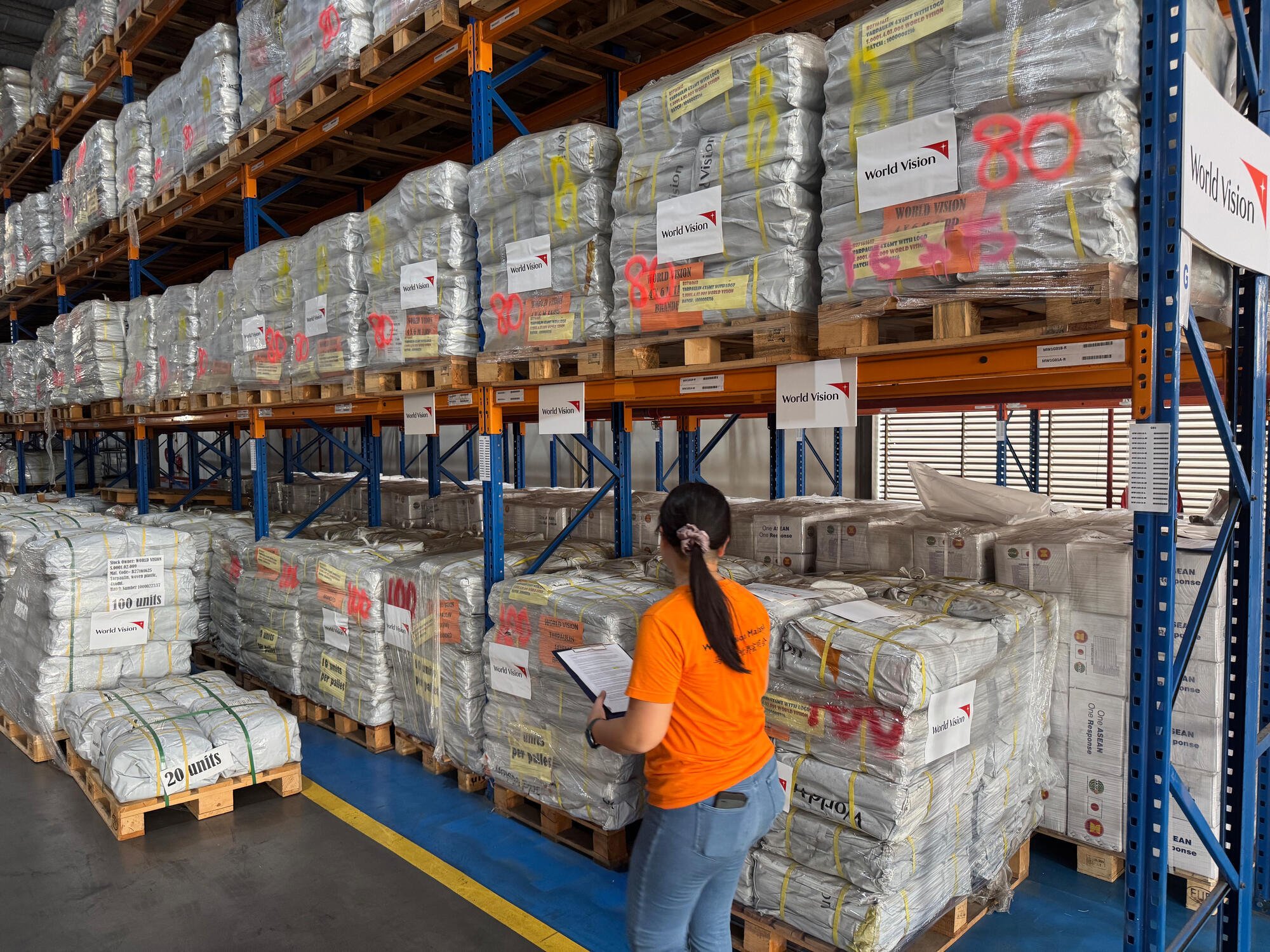
The programs that deploy fastest are the ones where product is donated and positioned before a disaster strikes. Pre-positioned supplies, a standing logistics network and trusted local distribution partners turn a donation into relief in hours instead of weeks.
Here is how that works at World Vision in the U.S.:
When Hurricanes Helene and Milton hit in fall 2024, World Vision used this model to send 13 truckloads of relief supplies to nine partners across Florida, Georgia, South Carolina and North Carolina. Much of that product had been donated in advance by corporate partners like Costco and Ace Hardware.
In 2025, World Vision U.S. reached 8.2 million people through its disaster relief responses worldwide.
When you evaluate any product donation program for rapid disaster response, ask three questions: Is product pre-positioned? Who moves it? And who hands it to families on the ground?
Choose a disaster relief partner on four things: speed, reach, brand safety and staying power. The best partner can move your cash, product and people within days, place goods where families actually need them, protect your brand, and remain in the community through long-term recovery.
Use these questions to compare partners during disaster relief partner selection:
|
Criterion |
Questions to ask |
What good looks like |
|---|---|---|
|
Speed |
How fast do you respond to a donation offer? How soon after a disaster are goods moving? |
A response within 24 hours, pickup in days, disaster activation in 24–72 hours |
|
Reach |
Where do you distribute, and through whom? |
An established network of vetted local partners in affected communities, in the U.S. and abroad |
|
Fit for your product |
What categories do you accept? Can you place large or unusual volumes? |
Broad category acceptance and matching to verified demand, so nothing is wasted |
|
Brand protection |
How do you prevent resale or dumping? What happens in a recall? |
Do-Not-Sell agreements, chain-of-custody documentation, recall-ready response |
|
Operational ease |
What do our teams need to do? Is there a cost? |
Coordinated logistics, digital intake, receipts and proof of delivery, no fees |
|
Reporting |
What impact data will we receive? |
Clear outcome metrics, stories and photos you can share |
|
Long-term commitment |
What happens after the cameras leave? |
A relief-to-recovery approach that supports rebuilding, not only emergency aid |
|
Employee engagement |
Can our people take part? |
Volunteer and kit-build options tied to the same response |
Two red flags deserve attention. First, a partner that can't document where your product went exposes your brand to resale or waste. Second, a partner that is only present for emergencies may not be there for the months of recovery that follow, which is where communities often need the most help.
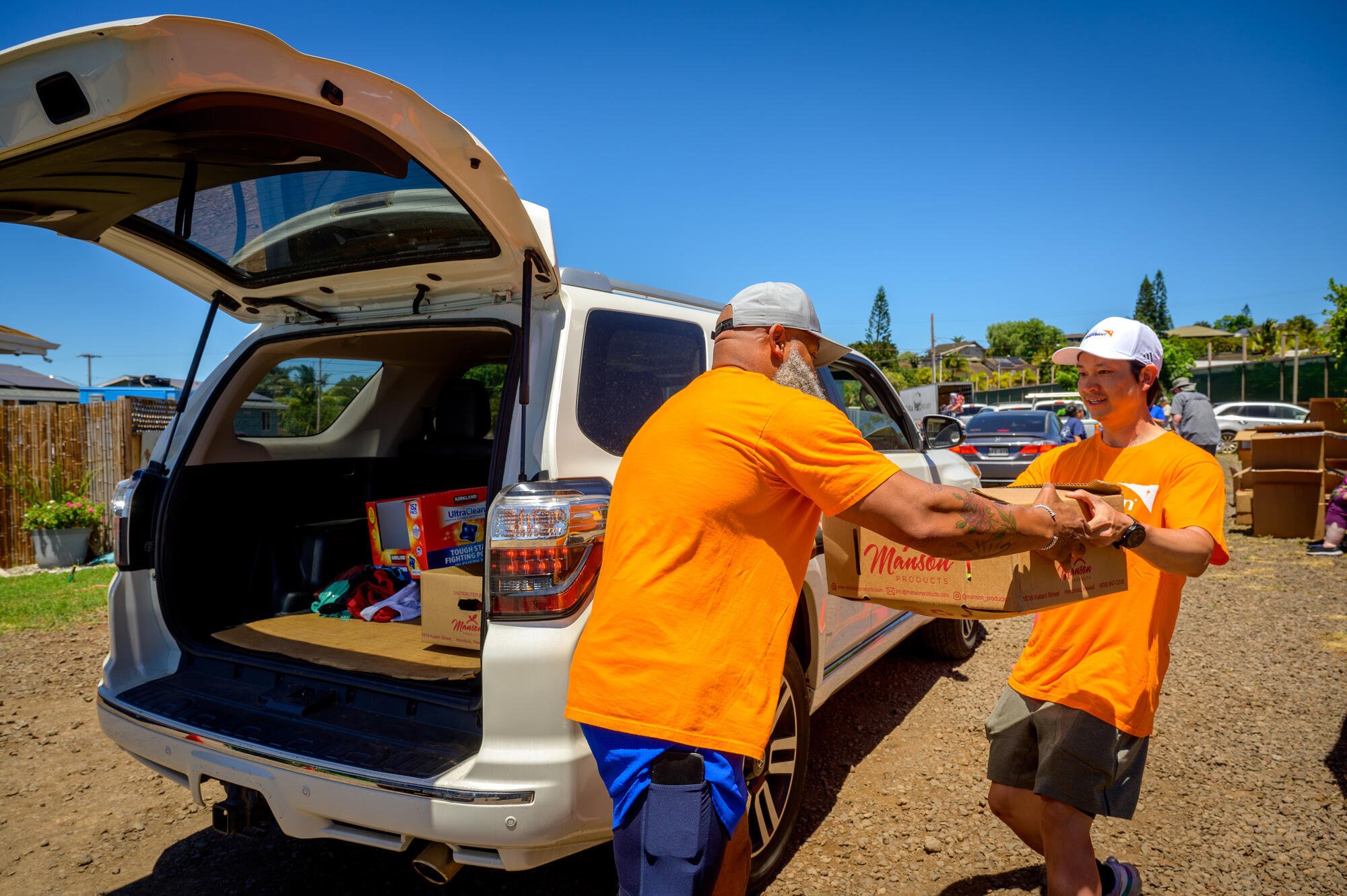
The disaster relief programs that best fit employee volunteering initiatives are hands-on, easy to scale across locations, and connected to a real response. Employees want to see that their time helped a specific family or community, not just that it filled an afternoon.
Strong options include:
The most effective programs connect employee volunteering to the company's other contributions. When employees build kits filled with the products their company makes, or hear how their company's donated goods reached a family after a hurricane, the partnership becomes part of company culture, not a once-a-year event.
When Hurricane Helene hit in fall 2024, Ace Hardware asked World Vision exactly what families needed for cleanup. Ace matched that list against products already in its warehouses, set up a donation website, and created the Ace Disaster Relief Bucket, filled with essentials like gloves, masks, sponges and disinfectants.
Ace retailers and employees responded fast. They sponsored 1,000 buckets at $40 each in less than 24 hours. Ace then added hurricane relief bundles, and 1,368 more were sponsored over the following week.
The partnership shows how product donations and employee participation work best together: Ace's people chose to give, Ace's products filled the need, and World Vision's network put those supplies into the hands of families starting to rebuild. Read the full story.
For 75 years, World Vision has worked alongside families and communities in crisis, following a relief-to-recovery approach: we respond in the first hours and stay through rebuilding. Hundreds of companies, including Costco, Kohler, Logitech, Lowe's, McKesson and P&G, partner with us to turn their products and people into help for children and families.
What corporate partners can expect:
Companies can combine product donations with disaster relief giving, employee engagement and cause marketing into one corporate disaster relief partnership, tailored to their goals.
What is the difference between product donations and cash donations for disaster relief?
Cash gives relief organizations flexibility to buy what's needed locally. Product donations deliver specific, high-need goods immediately, especially when they are pre-positioned before a disaster. Many companies give both: cash for flexibility and product for speed.
What products are most needed after a disaster?
In the first days, families most often need water, hygiene items, diapers, cleaning supplies and bedding. During recovery, needs shift toward building materials, household goods, school supplies and clothing.
How do companies protect their brand when donating product?
Look for a partner that uses Do-Not-Sell agreements, chain-of-custody documentation, vetted distribution partners and a recall-ready process. These safeguards keep donated goods out of resale markets and landfills.
Is there a cost to donate product to World Vision?
No. World Vision's product donation program has no fees for donors or recipients.
How quickly can a product donation reach disaster survivors?
Pre-positioned product can be loaded and moving within hours of a disaster, with World Vision's disaster activation typically underway in 24–72 hours. New donation offers usually receive a response within 24 hours, with pickup in 3–5 business days.
Can employees volunteer as part of a disaster relief partnership?
Yes. Kit builds, preparedness campaigns and giving campaigns let employees contribute directly to disaster response, alongside the company's product and financial support.
The best time to choose a disaster relief partner is before you need one. A corporate disaster relief partnership with World Vision puts your products, giving and people in place, so when the next storm or fire strikes, your company is already part of the response, and part of the recovery that follows.
Start a product donation or talk to our corporate partnerships team about building a disaster relief partnership that fits your goals.