Corporate Partner
Product Donation

 What are product donations?
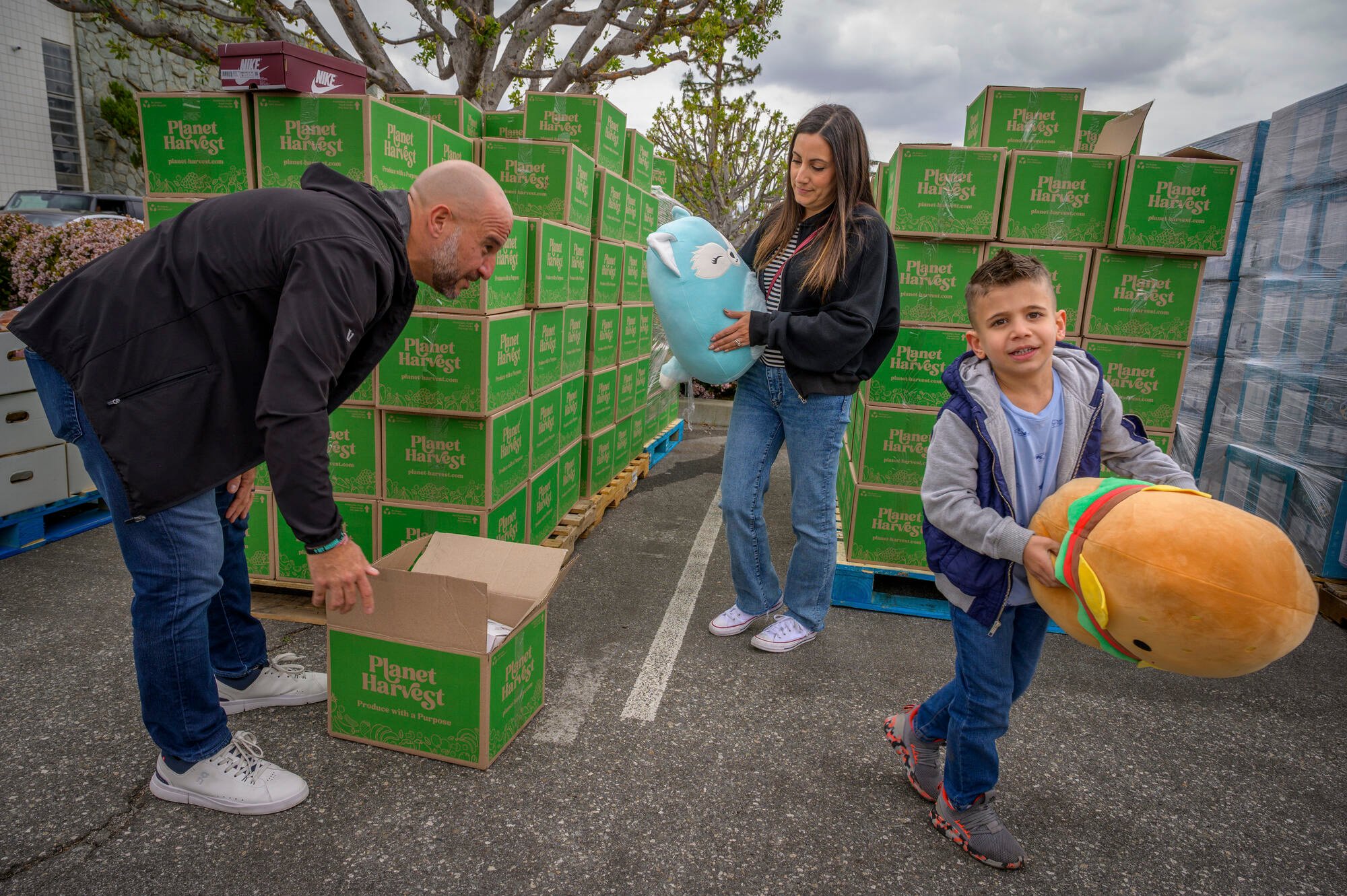
Product donations (also called in-kind donations or gifts-in-kind) are new, usable goods a company gives to a nonprofit instead of liquidating, destroying, or landfilling them. Common examples are excess inventory, first-quality customer returns, discontinued lines, and seasonal overstock. The nonprofit distributes the goods to people in need, and the company typically gets cleared warehouse space, landfill diversion it can report, and may qualify for a tax deduction.
World Vision has run corporate product donation programs for decades. Today, hundreds of companies, including Costco, Kohler, Logitech, Lowe's, McKesson, and P&G, use our program to move surplus product to families in more than 3,800 U.S. communities and 28 countries. Donors pay no fees, typical pickup happens in 3–5 business days, and every shipment is covered by a do-not-sell agreement and chain-of-custody documentation.
This guide explains how product donations work, what to donate, how they help in disasters, and how to choose a nonprofit partner, with real stories from companies that have done it.
A corporate product donation moves through five steps: offer, match, agreement, pickup, and distribution with reporting. With an experienced partner, the whole cycle from offer to pickup can take as little as three days.
There is no cost to donate through World Vision, for donors or for the local organizations that receive the goods.
The most useful donations are new, safe, everyday essentials that families would otherwise have to buy. World Vision accepts a wide range of categories for U.S. and international programs:
|
Category |
Examples |
Where it helps most |
|---|---|---|
|
Children's clothing and shoes |
Coats, sneakers, school uniforms |
Back-to-school, winter, disaster recovery |
|
Hygiene and baby care |
Diapers, soap, toothpaste, wipes |
Disaster kits, families in financial strain |
|
Household and cleaning goods |
Bedding, cookware, cleaning supplies |
Families moving back into damaged homes |
|
School supplies |
Backpacks, notebooks, classroom materials |
Under-resourced schools and teachers |
|
Building materials |
Fixtures, flooring, plumbing, tools |
Home repair after floods, fires, hurricanes |
|
Mobility and medical |
Wheelchairs, medical equipment and supplies |
Clinics and health programs abroad |
|
Power and recreation |
Generators, bicycles |
Disaster response; access to school and work |
What to avoid: expired, recalled, damaged, or unsafe goods; product with unclear provenance; and items that don't fit the climate or culture where they'll be used. Unrequested goods can clog warehouses and undercut local businesses, which is why the best partners say no to product they can't place responsibly.
In a disaster, donated products cover two different needs: emergency supplies in the first days, and rebuilding materials for months afterward. The companies that make the most difference plan for both, and route goods through a partner with warehouses already stocked and local relationships already in place.
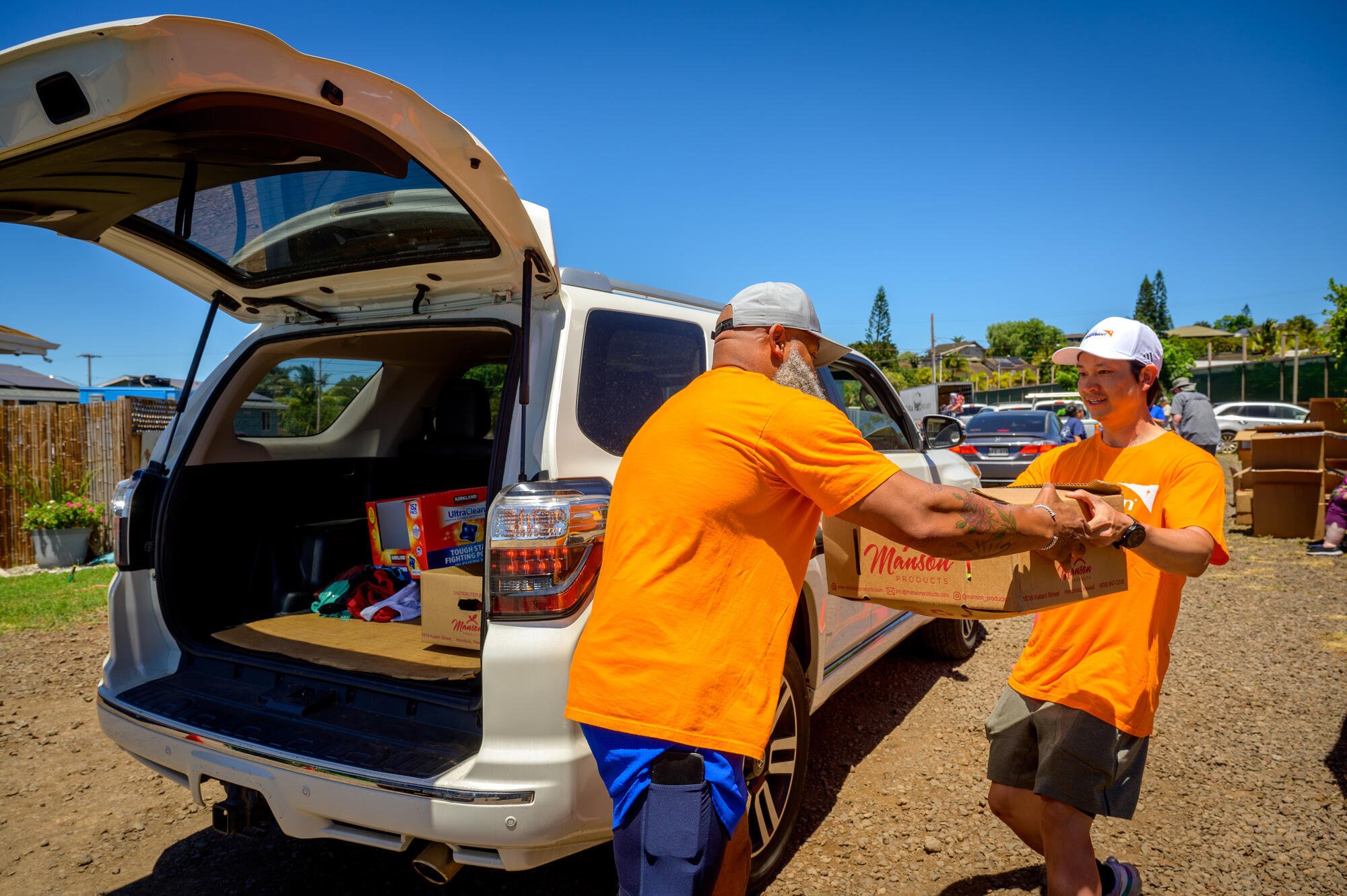
Hurricanes Helene and Milton (2024). Helene made landfall in Florida's Big Bend on September 26, 2024, and Milton struck near Siesta Key two weeks later. In the days after Helene, an early convoy of seven 53-foot tractor-trailers from World Vision's storehouses reached partner churches in Florida, Georgia, North Carolina, and South Carolina. Ahead of Milton, we dispatched 12 more trucks from six storehouses with water, diapers, hygiene kits, bedding, flood buckets, cleaning supplies, and generators.
Working with 20 local churches, the response delivered:
The emergency phase gave way to rebuilding. As initial needs were met, World Vision shifted to cleanup supplies like shovels, buckets, and bleach, many from Ace Hardware, whose staff and customers assembled relief buckets. Corporate donors including Ace Hardware, Lowe's, Costco, and Culligan's Culligan Cares team sent building materials and supplies. In Swannanoa, North Carolina, World Vision is teaming up with local partners to rebuild 150 homes. One of them, contractor Chris Cronin, said World Vision donated nearly all the building material for the houses his crew is working on.
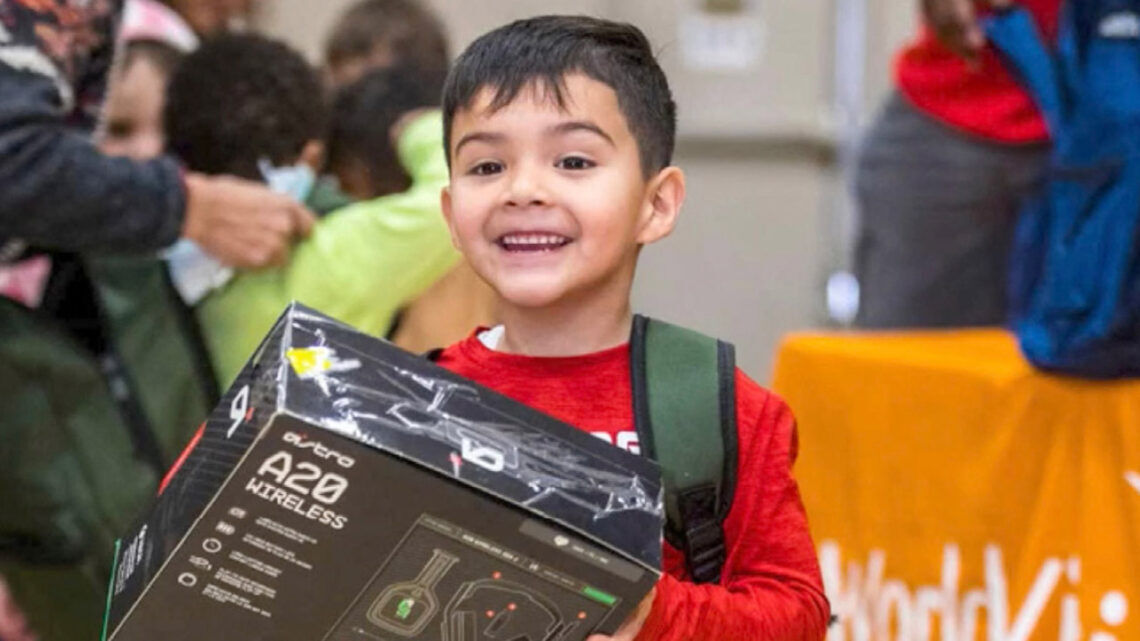
Maui wildfires (2023). At a World Vision distribution after the Maui fires, 4-year-old Kaeden picked out a new pair of shoes donated by a corporate partner. For a family that lost everything, a donated pair of shoes is one less thing to buy while rebuilding.
Why pre-positioned partners matter: World Vision activates disaster product in 24–72 hours because inventory is already sitting in regional storehouses. Companies that donate year-round effectively fund that readiness, so their product is on the first trucks out when the next storm hits.
The strongest product donation programs are long-running, tied to what the company already makes, and built on a partner that handles the logistics. Here's what that looks like in practice.
Since 2014, Costco suppliers and World Vision have kept more than 550,000 pallets of product out of landfills. In 2025 alone, that included 18,620,965 pounds of first-quality member returns. The program works in two ways: member returns are palletized at Costco's central return depots and loaded straight into World Vision trailers, and suppliers can donate "buyer pulls" from Costco inventory instead of destroying them or taking them back. World Vision pays to ship the product from the return depots to our distribution centers.
The impact reaches far beyond the warehouse. In Rwanda, Costco-donated bicycles turned a community health worker's 30-minute walk into a five-minute ride. Another volunteer can now visit three homes in the time one visit used to take. With more regular visits, the local clinic's child-stunting cases fell from 48 to 14. Closer to home, Costco donated 128 pallets of diapers, furnishings, personal care items, and food after the January 2025 Los Angeles wildfires.
After Hurricanes Helene and Milton, Ace retailers and corporate staff asked what they could do. World Vision gave them an exact list of needed products, Ace checked what was in its warehouses, and the Ace Disaster Relief Bucket was born. Ace retailers and employees sponsored 1,000 buckets of gloves, masks, sponges, and disinfectants at $40 each in less than 24 hours, then 1,368 hurricane relief bundles the following week. As Ace's Christine put it, "When you have a good partner, helping doesn't have to be hard."
Donated medical products are a core part of World Vision's health strategy. Rural health posts may lack running water, electricity, or paved roads, but Cardinal Health donations give them quality medical supplies. In district and referral hospitals, Cardinal Health products have in many cases allowed facilities to stay open when they otherwise would have closed.
McKesson's partnership with World Vision began in the early 2000s, when community volunteers caring for people with HIV and AIDS in Africa had few medical resources. When Ebola broke out, McKesson donated medical supplies so rural caregivers could protect themselves while caring for neighbors.
Originally known as Crystal Vision, the Storehouse Project has connected the building materials industry with vulnerable U.S. communities for more than 25 years. Manufacturers, wholesalers, and retailers route doors, windows, flooring, cabinetry, tools, and household essentials to disaster zones. Plumbing companies including Gerber, LIXIL, Kohler, Niagara, Rinnai, and RWC are among the partners. Jim Inglis, a former Home Depot EVP and founding member, describes it as a trusted, transparent way to make sure surplus inventory helps American communities.
Compared with liquidation or disposal, donation usually wins on four fronts: tax value, brand protection, cost, and sustainability.
|
Donate |
Liquidate |
Destroy / landfill |
|
|---|---|---|---|
|
Financial return |
Tax deduction, up to twice cost basis for qualifying C-corp gifts |
Pennies on the dollar |
None; you pay tipping fees |
|
Brand risk |
Low with do-not-sell agreements |
Product resurfaces at deep discounts |
Low, but wasteful |
|
Logistics cost |
Often covered by the nonprofit |
Varies |
Freight plus disposal fees |
|
Sustainability reporting |
Landfill diversion and social impact |
Limited |
Negative |
|
Stories to share |
Photos, impact data, beneficiary stories |
None |
None |
The enhanced tax deduction. Normally, a deduction for donated inventory is limited to its cost basis. Under IRC §170(e)(3), a C corporation that donates inventory to a qualified charity that uses it solely for the care of the ill, the needy, or infants can deduct cost basis plus half the appreciation, capped at twice cost basis. For example, inventory with a $12,000 basis and $20,000 fair market value yields a $16,000 deduction. The donating company needs a written statement from the charity confirming qualified use.
What changed in 2026. Under the One Big Beautiful Bill Act, corporate charitable deductions for tax years beginning after December 31, 2025, apply only to the extent total contributions exceed 1% of taxable income, with the 10% ceiling unchanged. Some tax advisors note that inventory treated as cost of goods sold may fall outside the floor. Talk to your tax advisor about how this applies to your program.
Brand and risk protection. World Vision donations carry donor indemnification, a strict do-not-sell policy that bars resale, trade, or barter, full chain-of-custody documentation, and recall procedures to pull affected product from distribution quickly.
Cost savings. Donating avoids disposal and storage costs. World Vision pays to ship product from return depots to our distribution centers, or sometimes freight companies donate shipping in-kind, or corporate donors will cover those costs themselves.
Sustainability and ESG. World Vision has diverted more than $2.9 billion in product from landfills. In 2025 we processed nearly 91,000 pallets from 262 corporate donors, valued at more than $257 million, at 99.5% accuracy. Partners receive reporting they can use in ESG and sustainability disclosures.
This section is general information, not tax or legal advice.
Vet a product donation partner the way you'd vet a vendor: on controls, speed, reach, and reporting. Ask these ten questions before you ship a pallet:
World Vision's answers: do-not-sell agreements with chain of custody, donor indemnification, recall-ready procedures, no fees, typical pickup in 3–5 business days, disaster activation in 24–72 hours, more than 3,800 U.S. communities and 28 countries, and monthly partner reporting with regular site visits.
They're largely the same thing. "In-kind donation" is the broader term for any non-cash gift, including services. "Product donation" and "gifts-in-kind" usually refer specifically to physical goods a company donates.
Yes. Donated inventory is generally deductible at cost basis. C corporations can claim an enhanced deduction of up to twice cost basis under IRC §170(e)(3) when the charity uses the goods solely for the care of the ill, needy, or infants. Starting in 2026, corporate charitable deductions are subject to a 1% of taxable income floor.
It depends on the nonprofit. Some charge fees or ask donors to cover freight and storage. World Vision charges no fees to donors or recipients.
Choose a partner with a signed do-not-sell agreement, chain-of-custody documentation, vetted local distribution partners, and distribution in individual or family quantities. Ask for proof of delivery.
World Vision cannot accept alcohol, tobacco, firearms, perishable food, recalled products, non-working electronics, prescription medications, opened food, or opened or leaking hazardous products.
Yes. First-quality returns are one of the most common donation streams. Costco suppliers, for example, route member returns from central return depots directly into World Vision trailers.
With World Vision, the average time from donation offer to pickup is about three days, with typical pickup in 3–5 business days.
Yes. World Vision places strategically matched product in 28 countries, including bicycles, medical supplies, hygiene items, and school supplies, based on local demand and cultural fit.
They supply water, generators, hygiene kits, and cleaning supplies in the first days, then building materials for rebuilding. After Hurricane Helene, World Vision's first convoy of seven tractor-trailers reached partner churches in four states within days.
If you have excess inventory, first-quality returns, or discontinued product, World Vision can typically respond within 24 hours and pick up in as few as three days, at no cost. Start a product donation or talk to our corporate team. Building materials companies can also join the Storehouse Project.